InCHORRRuS: Infant-Directed Communication Highlights and Organizes Repetition and Redundancy Through Rhythmic Structure
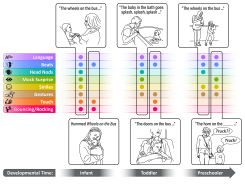
In the InCHORRRuS (Infant-directed (ID) Communication Highlights and Organizes Repetition and Redundancy through Rhythmic Structure) framework, increased rhythmicity in ID speech and the beat-based metrically structured rhythmicity in ID song naturally organize the multimodally redundant and repetitive cues in the caregiver's communicative signals, supercharging their saliency by increasing their predictability. Rhythmicity naturally modulates infant attention, guiding it to those communicatively rich times and scaffolding caregiver-infant coordination.
Parental Social and Musical Characteristics, the Home Music Environment, and Child Language Development in Infancy
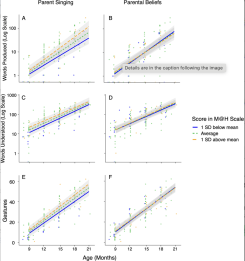
ABSTRACT Parents use music, especially singing, to interact with their young children, supporting parent-child bonding and social communication. Little is known about the parental attributes that support musical interactions with their infants. In this exploratory study, we analyzed self-report data from 43 caregiver/infant dyads at up to four time points (9, 12, 15, and 18 months) to assess parent social motivation and musical training as predictors of the home music environment overall, parental singing, and parental beliefs in the benefits of music.